
Hi Guys!
I know the subject has bounced around for awhile, but I was wondering if our community has come up with the definitive stereoscopic 3D ghosting test? Something that can give a numeric score for R,G,B values, greys, brightness levels, etc. in left/right views. Please share your favourites, and why. If you could improve the ones that do exist, how would you improve them?
Regards,
Neil
S-3D Ghosting Tests
-
Neil

- 3D Angel Eyes (Moderator)
- Posts: 6882
- Joined: Wed Dec 31, 1969 6:00 pm
- Contact:
-
BlackShark

- Certif-Eyable!
- Posts: 1156
- Joined: Sat Dec 22, 2007 3:38 am
- Location: Montpellier, France
Re: S-3D Ghosting Tests
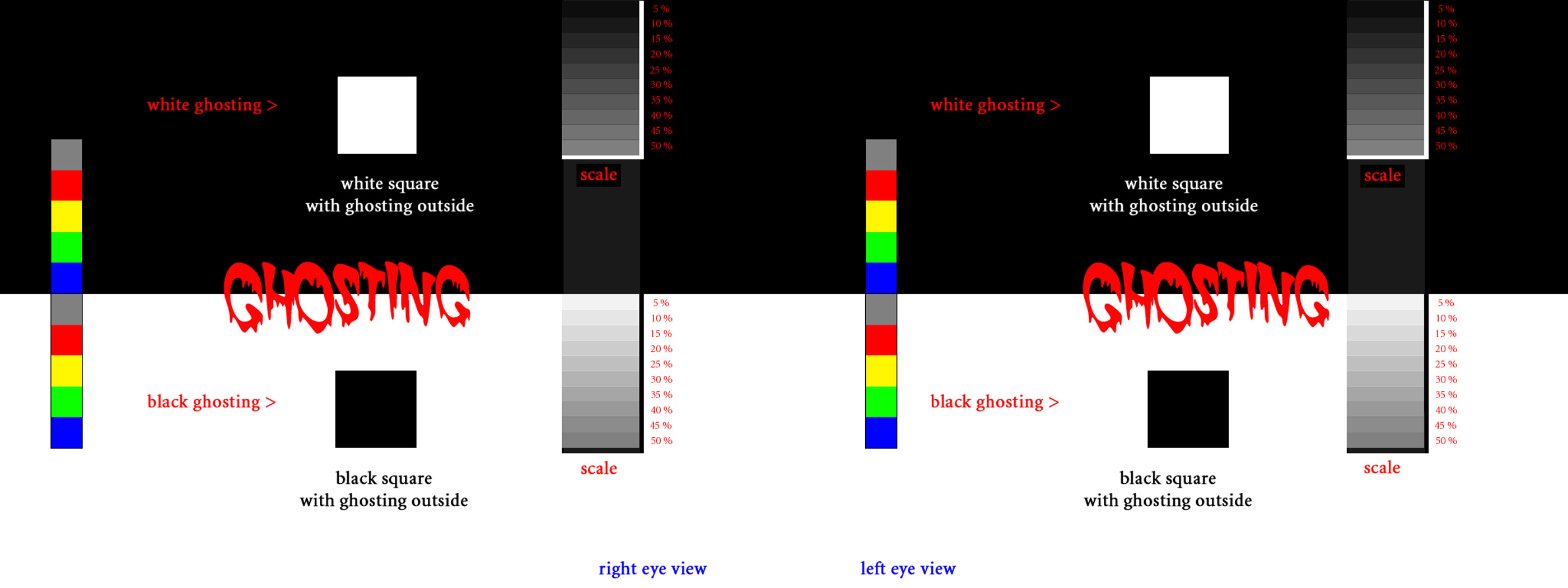
The best ghosting test I've come across for now is the Black/White ghosting test by WBloos, but it's far from perfect : it's quite difficult to use due to the many different measures to be made with it (black and white ghosting in both left eye and right eye) It takes a while to understand what exactly you are measuring.
And it's other problem is that the ghosting measurement scales are doubled (1/2 the light passing through corresponds to 100% ghosting, while it should be 50%)
It would be great if we could design together the ultimate stereoscopic 3D screen quality test, the one which would make visible absolutely every single defect in every single screen. But i guess it wouldn't fit on a single picture.
And it's other problem is that the ghosting measurement scales are doubled (1/2 the light passing through corresponds to 100% ghosting, while it should be 50%)
It would be great if we could design together the ultimate stereoscopic 3D screen quality test, the one which would make visible absolutely every single defect in every single screen. But i guess it wouldn't fit on a single picture.
Passive 3D forever !
DIY polarised dual-projector setup :
2x Epson EH-TW3500 (2D 1080p)
Xtrem Screen Daylight 2.0, for polarized 3D
3D Vision gaming with signal converter : VNS Geobox 501
DIY polarised dual-projector setup :
2x Epson EH-TW3500 (2D 1080p)
Xtrem Screen Daylight 2.0, for polarized 3D
3D Vision gaming with signal converter : VNS Geobox 501
-
vrekks
- Cross Eyed!
- Posts: 117
- Joined: Sun Nov 30, 2008 7:18 pm
Re: S-3D Ghosting Tests
Aren't there tools that are used to determine contrast ratio of new TV models? Something like a photometer connected to a computer? Couldn't these be adopted to measure ghosting? I don't know if these are prohibitively expensive but a simple photocell with a program designed to show black and white to left and right eyes respectively might do the trick.
"Who has ever torn himself from the claw that encloses you when you drop a seed in a TV parlor? It grows you any shape it wishes! It is an environment as real as the world. It becomes and is the truth. Books can be beaten down with reason. But with all my knowledge and scepticism, I have never been able to argue with a one-hundred-piece symphony orchestra, full colour, three dimensions, and I being in and part of those incredible parlors."
-
taz291819
- Cross Eyed!
- Posts: 142
- Joined: Mon Jan 04, 2010 9:59 am
Re: S-3D Ghosting Tests
I don't know how this would be scientifically possible, since ghosting can be caused by the source material, the display, and/or the glasses.
-
BlackShark
- Certif-Eyable!
- Posts: 1156
- Joined: Sat Dec 22, 2007 3:38 am
- Location: Montpellier, France
Re: S-3D Ghosting Tests
2D testing usually involves a display calibration device which must be placed directly against the screen to provide accurate information.
It just would not work for 3D because you'd have to put the glasses between the display and the calibration device. Moreover, even by doing so, you'd probably not get a reliable information regarding what you actually see through the glasses when watching the TV.
At the moment 3D ghosting tests are is mainly made directly by the user, at best it could be made with a digital camera by taking a picture of the TV seen through the glasses.
It just would not work for 3D because you'd have to put the glasses between the display and the calibration device. Moreover, even by doing so, you'd probably not get a reliable information regarding what you actually see through the glasses when watching the TV.
At the moment 3D ghosting tests are is mainly made directly by the user, at best it could be made with a digital camera by taking a picture of the TV seen through the glasses.
Passive 3D forever !
DIY polarised dual-projector setup :
2x Epson EH-TW3500 (2D 1080p)
Xtrem Screen Daylight 2.0, for polarized 3D
3D Vision gaming with signal converter : VNS Geobox 501
DIY polarised dual-projector setup :
2x Epson EH-TW3500 (2D 1080p)
Xtrem Screen Daylight 2.0, for polarized 3D
3D Vision gaming with signal converter : VNS Geobox 501
-
Neil
- 3D Angel Eyes (Moderator)
- Posts: 6882
- Joined: Wed Dec 31, 1969 6:00 pm
- Contact:
Re: S-3D Ghosting Tests
What about visual charts, etc. Anyone have some ideas?
Regards,
Neil
Regards,
Neil
-
Likay

- Petrif-Eyed
- Posts: 2913
- Joined: Sat Apr 07, 2007 4:34 pm
- Location: Sweden
Re: S-3D Ghosting Tests
It's difficult to make a ghosting chart that covers all stereoscopic solutions i think. Most solutions have common ghosting properties (ghosting looks similar between different devices and could be done similar to wbloos image with adds for the different colors if needed). However the iz3d stands out here since ghosting looks entirely different and also gives other colors than the original image. I guess it would be difficult to implement a chart that covers all products without being too messy... Circular polarization also adds a very slight tint of discoloring in rare cases. So this is tricky.
I have to agree with Blackshark that taking pictures/videos of the solution with glasses between is what gives the most fair comparisons. This isn't practical and cameras differs a lot between brands, especially when photographing a screen which might not have the same wavelengths for the basecolors as the ccd in the camera.... Everything also seems to look worse through the cameralense.
They say cameras adds 10 pounds to your weight and the same seems to be rule when taking pictures on stereorigs.
So: I think a general ghosting test similar to Werner Bloos image with maybe a color chart for every color (doubt this is needed though) and with additions of pictures/video taken of the rig in action is the best to represent it.
No matter what: Regarding new solutions i really think some of them shouldn't ever reached the customers because of a bad experience of ghosting/artifacts etc. As i see it the experimental time should have passed for a long time ago and customers should be able to get priceworthy products with good ratings when it comes to ghosting, brightness and total experience. It seem like we're approaching a messy time because of all factors that needs to match to get good stereo. I hope it won't scare off too many from new s-3d.
I have to agree with Blackshark that taking pictures/videos of the solution with glasses between is what gives the most fair comparisons. This isn't practical and cameras differs a lot between brands, especially when photographing a screen which might not have the same wavelengths for the basecolors as the ccd in the camera.... Everything also seems to look worse through the cameralense.
They say cameras adds 10 pounds to your weight and the same seems to be rule when taking pictures on stereorigs.
So: I think a general ghosting test similar to Werner Bloos image with maybe a color chart for every color (doubt this is needed though) and with additions of pictures/video taken of the rig in action is the best to represent it.
No matter what: Regarding new solutions i really think some of them shouldn't ever reached the customers because of a bad experience of ghosting/artifacts etc. As i see it the experimental time should have passed for a long time ago and customers should be able to get priceworthy products with good ratings when it comes to ghosting, brightness and total experience. It seem like we're approaching a messy time because of all factors that needs to match to get good stereo. I hope it won't scare off too many from new s-3d.
Mb: Asus P5W DH Deluxe
Cpu: C2D E6600
Gb: Nvidia 7900GT + 8800GTX
3D:100" passive projector polarized setup + 22" IZ3D

Cpu: C2D E6600
Gb: Nvidia 7900GT + 8800GTX
3D:100" passive projector polarized setup + 22" IZ3D
-
Neil
- 3D Angel Eyes (Moderator)
- Posts: 6882
- Joined: Wed Dec 31, 1969 6:00 pm
- Contact:
Re: S-3D Ghosting Tests
Still, can you guys share some image charts here?
Regards,
Neil
Regards,
Neil
-
Rosomack

- Two Eyed Hopeful
- Posts: 95
- Joined: Sun Feb 15, 2009 1:45 pm
- Location: Gdansk, Poland


-
Likay
- Petrif-Eyed
- Posts: 2913
- Joined: Sat Apr 07, 2007 4:34 pm
- Location: Sweden
Re: S-3D Ghosting Tests
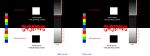
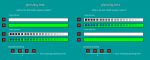
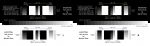
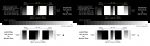
S-3D testimages:
Posted by Freke:
Posted by Yuriy:
Parallell image posted by Werner Bloos:
Crossview image posted by Werner Bloos:
DDD image
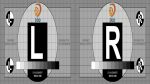
Personally i like Freke's image because it's easiness to figure out the image. The best one is Werner Bloos though.
Anaglyph testimages:
My own anaglyph testimage. Easy for direct comparisons:
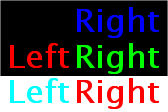
AntiCatalysts first anaglyph testimage:
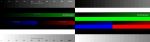
AntiCatalysts enhanced anaglyph testimage:
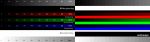
Posted by Freke:
Posted by Yuriy:

Parallell image posted by Werner Bloos:

Crossview image posted by Werner Bloos:

DDD image

Personally i like Freke's image because it's easiness to figure out the image. The best one is Werner Bloos though.
Anaglyph testimages:
My own anaglyph testimage. Easy for direct comparisons:
AntiCatalysts first anaglyph testimage:

AntiCatalysts enhanced anaglyph testimage:

Last edited by Likay on Sat Jul 23, 2011 5:18 am, edited 5 times in total.
Mb: Asus P5W DH Deluxe
Cpu: C2D E6600
Gb: Nvidia 7900GT + 8800GTX
3D:100" passive projector polarized setup + 22" IZ3D
Cpu: C2D E6600
Gb: Nvidia 7900GT + 8800GTX
3D:100" passive projector polarized setup + 22" IZ3D
-
cybereality

- 3D Angel Eyes (Moderator)
- Posts: 11407
- Joined: Sat Apr 12, 2008 8:18 pm
Re: S-3D Ghosting Tests
I think the images posted above seem like a good place to start. Black on white ghosting is the most obvious, although different colors may react differently and should be tested as well. I think the test should also include real world examples such as photographs or game screengrabs that highlight various problem situations. This could be for more of a qualitative analysis.
One problem to address, though, is that different solutions have different problems which cause the ghosting. This means one static test may not work for all solutions. For example, the Nvidia 3D Vision 120Hz monitors seem to have ghosting only on the top 1/3rd of the screen. So a test that had objects in the center of the screen would get a passing grade even though the monitor had problems. Similarly, the Zalman Trimon has ghosting but in different areas depending on where you sit. So do you test the best case scenario or the worst?
If you need any Photoshop help putting this together I would be glad to lend a hand.
One problem to address, though, is that different solutions have different problems which cause the ghosting. This means one static test may not work for all solutions. For example, the Nvidia 3D Vision 120Hz monitors seem to have ghosting only on the top 1/3rd of the screen. So a test that had objects in the center of the screen would get a passing grade even though the monitor had problems. Similarly, the Zalman Trimon has ghosting but in different areas depending on where you sit. So do you test the best case scenario or the worst?
If you need any Photoshop help putting this together I would be glad to lend a hand.
-
budda
- Sharp Eyed Eagle!
- Posts: 389
- Joined: Thu May 22, 2008 9:13 pm
Re: S-3D Ghosting Tests
Hi,
Here is one way to do a ghosting test.
Use two images in a stereo pair, where one image is totally black and the other image is the image being tested for ghosting.
When shown in field sequential 3D, the test image is flashed and then allowed to decay whilst the black image is shown.
To best capture the decaying image - the ghost image - take a photo through the shutterglass corresponding to the side showing the black image.
The aperture could remain open for some time to build up the ghost image if necessary.
Alternatively, use a fast camera without the shutterglasses, and trigger it with vertical synch for exactly the frame time length of the test image. Photo editing software can then be used to analyse and display the ghosting at leisure.
Thanks.
Here is one way to do a ghosting test.
Use two images in a stereo pair, where one image is totally black and the other image is the image being tested for ghosting.
When shown in field sequential 3D, the test image is flashed and then allowed to decay whilst the black image is shown.
To best capture the decaying image - the ghost image - take a photo through the shutterglass corresponding to the side showing the black image.
The aperture could remain open for some time to build up the ghost image if necessary.
Alternatively, use a fast camera without the shutterglasses, and trigger it with vertical synch for exactly the frame time length of the test image. Photo editing software can then be used to analyse and display the ghosting at leisure.
Thanks.
-
Dom
- Diamond Eyed Freakazoid!
- Posts: 824
- Joined: Sun Oct 19, 2008 12:30 pm
- Contact:
Re: S-3D Ghosting Tests
Hi this is the first time I have seen the ghosting tests and they seem adequite as to follow a chart for remebering but what about posting or saving the screenshot with the actual ghosting peramerters on your screen and area without the need of a flash camera photo behind the glasses.
I suppose there could be made a mouse cursor with a grid pattern pink static test, ghosting test that will let you save the ghosting positions on your screen with a mouse click marker in the crosstalk areas and then invert the image to show and highlight the ghosted part. Also showing a numerical value of the space between the crosstalk from 1=excellent to 5 being bad/blurry.
I suppose there could be made a mouse cursor with a grid pattern pink static test, ghosting test that will let you save the ghosting positions on your screen with a mouse click marker in the crosstalk areas and then invert the image to show and highlight the ghosted part. Also showing a numerical value of the space between the crosstalk from 1=excellent to 5 being bad/blurry.
http://www.cns-nynolyt.com/files/doms-systemspecs.html My System specs In HTML
Cyberia on Youtube
__________________________________________________________________________________________
Cyberia on Youtube
__________________________________________________________________________________________
-
BlackShark
- Certif-Eyable!
- Posts: 1156
- Joined: Sat Dec 22, 2007 3:38 am
- Location: Montpellier, France
Re: S-3D Ghosting Tests
Neil, can you make a new section in the downloads or in the gallery for all the ghosting tests so that we can grab copies easily without having to search throughout the forums everytime we want to find them ?
Passive 3D forever !
DIY polarised dual-projector setup :
2x Epson EH-TW3500 (2D 1080p)
Xtrem Screen Daylight 2.0, for polarized 3D
3D Vision gaming with signal converter : VNS Geobox 501
DIY polarised dual-projector setup :
2x Epson EH-TW3500 (2D 1080p)
Xtrem Screen Daylight 2.0, for polarized 3D
3D Vision gaming with signal converter : VNS Geobox 501
-
Neil
- 3D Angel Eyes (Moderator)
- Posts: 6882
- Joined: Wed Dec 31, 1969 6:00 pm
- Contact:
Re: S-3D Ghosting Tests
I will add these to the guide section. That should work well.
Regards,
Neil
Regards,
Neil
-
AWoods
- SD&A Co-Chair
- Posts: 57
- Joined: Sat Dec 22, 2007 3:38 am
Re: S-3D Ghosting Tests
Last month I presented a paper titled "Understanding Crosstalk in Stereoscopic Displays" at the 3D Systems and Applications (3DSA) conference in Tokyo.
The paper was also repeat presented at the SID (Society for Information Display) annual Symposium in Seattle USA.
The paper covers definitions of crosstalk/ghosting/leakage as well as methods of measurement, a summary of the mechanisms of crosstalk, simulation of crosstalk, crosstalk reduction, etc.
The 11 page technical paper can be downloaded for free from: http://www.3d.curtin.edu.au" onclick="window.open(this.href);return false;
Cheers,
Andrew.
The paper was also repeat presented at the SID (Society for Information Display) annual Symposium in Seattle USA.
The paper covers definitions of crosstalk/ghosting/leakage as well as methods of measurement, a summary of the mechanisms of crosstalk, simulation of crosstalk, crosstalk reduction, etc.
The 11 page technical paper can be downloaded for free from: http://www.3d.curtin.edu.au" onclick="window.open(this.href);return false;
Cheers,
Andrew.
-
Fredz
- Petrif-Eyed
- Posts: 2255
- Joined: Sat Jan 09, 2010 2:06 pm
- Location: Perpignan, France
- Contact:
Re: S-3D Ghosting Tests
Very informative article, thank you !
Reading it, I was wondering if an equivalent of M3GA for 3D displays/glasses would be feasible using the crosstalk measurement test charts you mentionned.
I was quite surprised by the chart on figure 5 showing transmission vs time response of an example pair of LCS 3D glasses. Is it real data or only an example ? Because the rise time looks quite bad (several milliseconds apparently)...
Reading it, I was wondering if an equivalent of M3GA for 3D displays/glasses would be feasible using the crosstalk measurement test charts you mentionned.
I was quite surprised by the chart on figure 5 showing transmission vs time response of an example pair of LCS 3D glasses. Is it real data or only an example ? Because the rise time looks quite bad (several milliseconds apparently)...